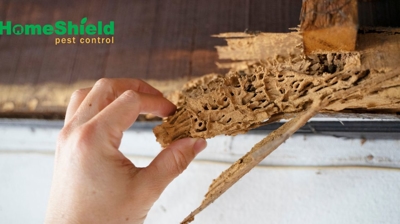
What to do if you think your home has termites
Termites may be small, but don't let their size fool you! These sneaky little critters can wreak havoc on your Orange County home. What's worse, you're not likely to ever actually see a termite. They hide in the ground or inside your walls. That's the bad news. The good news is they leave behind some pretty interesting clues you can track. Join us today as we look at these clues, why termite signs are often hard to see, what termite damage looks like, and factors that lead to a termite infestation. If you already know you have termites in your Orange County home and want to know what to do about those destructive pests, connect with us and speak with one of our pest professionals. We offer advanced and trusted termite pest control in Orange County.

Contact The Professionals At The First Sign Of Termites
If you have noticed any signs of termite damage, such as wood that sounds hollow when tapped, or mud tubes on your walls or foundation, it is important to take action immediately. The longer you wait, the more damage termites can cause to your home. Professional termite control in Orange County is also critical because DIY treatments can fail when they are misapplied, which can lead to ongoing termite damage, even though you believe your home is protected.
Contact HomeShield Pest Control at the first sign of termites. We have the knowledge, expertise, and tools necessary to effectively identify and treat termite infestations. We can also provide preventative measures to protect your home from future infestations—or to prevent an infestation in the first place. If you live in Orange County and you're looking for a local termite company, we're the right choice. Reach out to us today to learn more about the services we offer so one of our highly-trained termite control professionals may guide you toward the right solution for you and your home. We're here to help you find answers to your termite control questions.
You're Not Likely To Ever Actually See A Termite
Termites are known for causing extensive damage to homes, often going unnoticed until the damage is already done. Before we discuss why you're not likely to see termites on your property or in your home, let's first discuss what clues you can look for to detect active termites.
Tubes: One of the most common warning signs of a termite infestation is the presence of mud tubes. These tubes, which are about the width of a pencil, are created by subterranean termites and are used to travel from their underground nests to the wood they are feeding on. You may find these mud tubes on your foundation walls, exterior walls, or in the crawl space under your home if you have subterranean termites.
Wings: Another telltale warning sign of a termite infestation is the presence of discarded wings. Termites often swarm in the spring, during which time they will shed their wings after mating. These discarded wings can be found near windows, doors, and light sources. If you have drywood termites or a severe infestation of subterranean termites, you may find wings in your home.
Damage: In addition to mud tubes and discarded wings, you should also watch for evidence of termite damage. To locate subterranean termite damage, you'll need to explore areas that are damp or inspect wood close to the soil. To locate drywood termite damage, inspect window sills, door frames, and baseboards in your home.
Clicking: In rare cases, termites make a clicking or rustling sound. It is the sound of soldiers tapping their heads on their tunnel walls. They do this to warn the workers of invading ants or some other enemy.
Feces: If you have a drywood termite infestation, you may notice droppings, which are called frass. Frass looks like small piles of sawdust and can often be found near areas where these termites are active.
Now that you know the signs, let's discuss why these signs are often hard to find. It has to do with the kind of termites leaving these signs. We're not talking about whether they're subterranean or drywood termites. We're referring to the caste. There are two kinds of termites that will likely leave warning signs: Workers and swarmers. Why not soldiers too? While termite soldiers make the clicking noises we mentioned earlier, it is rare for an enemy to enter termite tunnels, particularly inside homes. Termite workers seal holes in tunnel walls, and soldiers use their heads to plug holes that the workers need to patch. They work together to keep enemy organisms out. So, we'll focus on the signs provided by the workers and soldiers. Here are some facts you should know:
- Termite workers hide in the ground or inside the wood they're eating. You can have hundreds of thousands in your home and never see them. Subterranean termite workers are particularly good at hiding from view.
- Termite workers avoid the light. They don't even like to come out in the moonlight.
- Subterranean termite workers stay in the tunnels where it is moist. They are simple organisms with thin skins, and they dry out easily. So, they'll stay hidden to avoid light and dry conditions.
- Termite workers are quiet while they eat the wood of your home. They don't munch. They scrape on wood.
- Termite swarmers are only 3/8 inches. While you won't likely miss a termite swarm in your house, you might not notice one little swarmer that lands on your skin while you're out in the yard. You'll need to keep watch.
- Termite swarms last a short time. They mate quickly and disappear into the ground or cracks in your home. A swarm can appear in your yard and dissipate in the time it takes to go watch a movie at the theater.
Termites are sneaky. The way they damage your home is also sneaky. We touched on how you may look for termite damage, but it bears more discussion. Let's take a closer look.
Know The Warning Signs Of Termite Damage
Termite damage is often hidden in dark places that are hidden from the light, and the damage caused by termites is done on the inside of wood. You'll have to put your detective hat on to find the clues.
Trenches: If you find damage that looks like trenches on top of each other, you've likely found termite damage. Subterranean termite tunnels will feel gritty to the touch. Drywood termite tunnels will feel smooth.
Hollow-sounding wood: If the wood in your home sounds hollow when you tap on it, it could be a sign of termite damage.
Honeycomb dents: When termites tunnel in your baseboards, you may start to see dents on the surface of the wood.
Buckling or swollen floors: Termites can cause the floors in your home to buckle or become swollen.
Sagging or drooping drywall: Drywall that appears to be sagging or drooping could be a sign of termite damage.
If you notice any of these warning signs, it's important to contact a certified termite control professional as soon as possible to inspect your home and assess the extent of the damage. For assistance with termites in Orange County, contact HomeShield Pest Control.
Causes And Factors For Termite Infestations
You now know how to detect evidence of a termite infestation, but what can you do to prevent termites from munching on your home in the first place? One way is to consider the factors that lead to infestations. Termites are attracted to warm, humid environments and are drawn to wood and other cellulose-based materials. Consider these factors that can increase the risk of a termite infestation in your Orange County home.
Wood-to-Soil Contact: If your home has any wood-to-soil contact, such as wooden porch steps, tree roots touching your foundation or untreated wood in your landscaping, it can provide termites with easy access to your home.
Water Damage: Leaks, broken pipes, or other water damage can create moist environments that attract termites. Addressing and fixing any moisture issues in your home is essential to reducing the risk of a termite infestation.
Construction Issues: Poor construction or renovations can create entry points for termites. Cracks in your foundation, gaps around pipes or vents, and improperly sealed windows and doors can all provide easy access for termites.
Landscaping: Your yard can play a role in attracting termites to your home. Trees or bushes that are planted too close to your home can provide a bridge for termites to enter. Additionally, mulch or other landscaping materials can create moist environments that termites are drawn to.
Location: Some areas are naturally more prone to termite infestations than others. In Orange County, for example, the climate makes it an ideal environment for termites. There isn't much we can do about that.
When you address these factors you can deter termites from encroaching upon your home and finding a bite to eat inside your home. Doing so will reduce the risk of termite damage. While your hard work won't guarantee a termite-free home, it is better to do something than to do nothing at all.

Our Pest Control Services
We Provide Reliable Home Pest Control And Commercial Pest Control Solutions.


Why Our Customers Love Us
HomeShield Pest Control received an average rating of 5.0 out of 5 stars from over 8000+ reviews.
-
Thank you Home Shield Team!!“My family has tried a few companies in the past but nothing compares to our experience with Home Shield. Every issue we had they handled, and quickly! We had rodent, spider and ant issues and they found the solution. My wife also prefers all organic products and they offered that option as well -- hard to find. Everyone is friendly and professional. The management team and accounting is top notch. I dealt directly with Mike Turner (manager) and he was incredibly thoughtful and helpful. Took time and answered all questions and made me feel confident in the process and outcome. Would recommend to friends and family. Thank you Home Shield Team!!”- Alex S.
-
very professional company with good communication!“I contracted with HomeShield about a year ago to handle pest control on two properties. I would gladly recommend them as a reliable very professional company with good communication!
”- Carol Z. -
Excellent service“Excellent service. Very thorough and took the time to walk me through everything
”- Kimberly S. -
Another great service“Another great service by Carlos (Andres)...and trainee, Edgar.”- Elliot S.
-
’ve always had a great and transparent experience with HomeShield“My technician, Brandon, was very thorough and methodical on placement of a variety of traps, sprays, and dehydrators depending on the current need. He always walks through the home making note of entry points, areas of excess humidity, and helps me understand what it is he is using and what it is targeted for. I’ve always had a great and transparent experience with HomeShield and will continue being their customer in the years to come!”- Kristina N.
-
Michael is always on time, polite, and professional“Michael is always on time, polite, and professional. He texts when he is on his way and once he arrives, so that we may make sure our dog is inside.
”- Dawn H. -
Professional“Professional and personable at the same time. Perfect mix
”- Ann -
Would recommend this company!“
Braden was my tech today. He showed up on time (within his window) and called beforehand so I wasn't sitting around all day, which I appreciate. He wore booties upon entering my home and was kind and courteous, knowledgeable and funny. Pretty much an easy experience. He was very thorough in his assessment. Noticed stuff I had missed. Pricing was very decent too. Would recommend this company!
”- Stina I.

Featured On


.svg.2405150737550.png "Fox5")
-
 NPMA
NPMA -
Pest Control Operators of California
-
GreenPro
-
BBB
-
EcoSmart